
Parenthood can make even simple routines feel surprisingly complicated.
You may spend the morning making breakfast, packing lunches, finding missing shoes, and getting everyone out the door—only to realize you barely had time to think about your own teeth. Evenings can be just as hectic.
When you’re responsible for everyone else’s needs, your own oral health can easily move toward the bottom of the list.
If that sounds familiar, you don’t need a perfect routine or another reason to feel guilty. What helps most is building a few realistic habits that can survive busy mornings, unpredictable schedules, and tired evenings.
Taking care of your smile is also one of the ways you model healthy habits for your children. When oral hygiene is simply part of family life, everyone can benefit.
QUICK ANSWER: HOW CAN BUSY PARENTS MAINTAIN GOOD ORAL HEALTH?
Busy parents can protect their oral health by keeping their routine simple and consistent: floss before brushing, brush thoroughly twice daily, drink water regularly, keep basic dental supplies convenient when away from home, and maintain recommended preventive dental visits.
Rather than trying to create a perfect routine, connect oral care to habits that already happen every day.
A routine that fits your real life is far more useful than an ideal routine that’s too complicated to maintain.
MAKE ORAL HYGIENE PART OF A ROUTINE YOU ALREADY HAVE
One of the easiest ways to forget a habit is to make it dependent on finding extra time.
Parents rarely have much of that.
Instead, connect oral hygiene to something you already do consistently.
In the morning, Dr. Coates recommends:
Water → breakfast → floss → brush
Eating breakfast before completing your oral hygiene routine means you’re cleaning away food debris afterward rather than brushing and then immediately eating.
At night, finish eating before your final oral hygiene routine whenever practical. Floss first to loosen plaque and food particles between your teeth, then brush.
You can also pair dental care with predictable household moments: after the kids finish breakfast, after everyone gets pajamas on, or while children complete their own brushing routines.
Attaching dental habits to existing family routines can make consistency easier without adding another complicated task to your day.
STOP EXPECTING EVERY DAY TO GO ACCORDING TO PLAN
Parents know that routines can fall apart quickly.
Someone wakes up late. A child gets sick. Practice runs long. Dinner happens later than expected.
Missing part of your dental routine occasionally doesn’t mean you’ve failed.
If you forget to floss one evening, start again the next day. If you rush out without brushing one morning, return to your routine when you can.
The bigger concern is when an occasional disruption quietly becomes the new normal.
Our guide to what really happens to your teeth when you skip your oral hygiene routine explains why repeated plaque accumulation matters while also reinforcing an important point: consistency matters more than perfection.
Try to avoid responding to a missed session by brushing aggressively later. Gentle, thorough cleaning is more useful than attempting to compensate for a busy day.
A disrupted routine doesn’t need to stay disrupted—you can restart with the very next opportunity.
MAKE HEALTHY CHOICES EASIER ON BUSY DAYS
Dental habits extend beyond your toothbrush.
Parents often eat on the go, finish children’s leftovers, sip coffee throughout the morning, or snack whenever there’s finally a free moment.
You don’t need to eliminate every snack or favorite drink, but frequency matters because each exposure can change the environment inside your mouth.
A few practical habits can help:
- Keep a reusable water bottle nearby.
- Choose water frequently between meals.
- Try to eat snacks at defined times rather than grazing continuously.
- Keep floss available somewhere convenient.
- Avoid letting a late-night snack replace your completed bedtime routine.
Water is particularly helpful because it supports saliva and helps rinse away food debris.
If you’re constantly moving between work, school pickups, sports, and errands, our article on why staying hydrated is more important for your teeth than you think explains why something as simple as drinking water can support oral health.
Making the healthier choice convenient is often more effective than relying on willpower during an already busy day.
CARING FOR YOUR TEETH SETS AN EXAMPLE FOR YOUR CHILDREN
Children learn from what they see.
You can tell them brushing and flossing are important, but watching you make those habits part of your day reinforces the message in a different way.
Consider turning oral hygiene into a family routine.
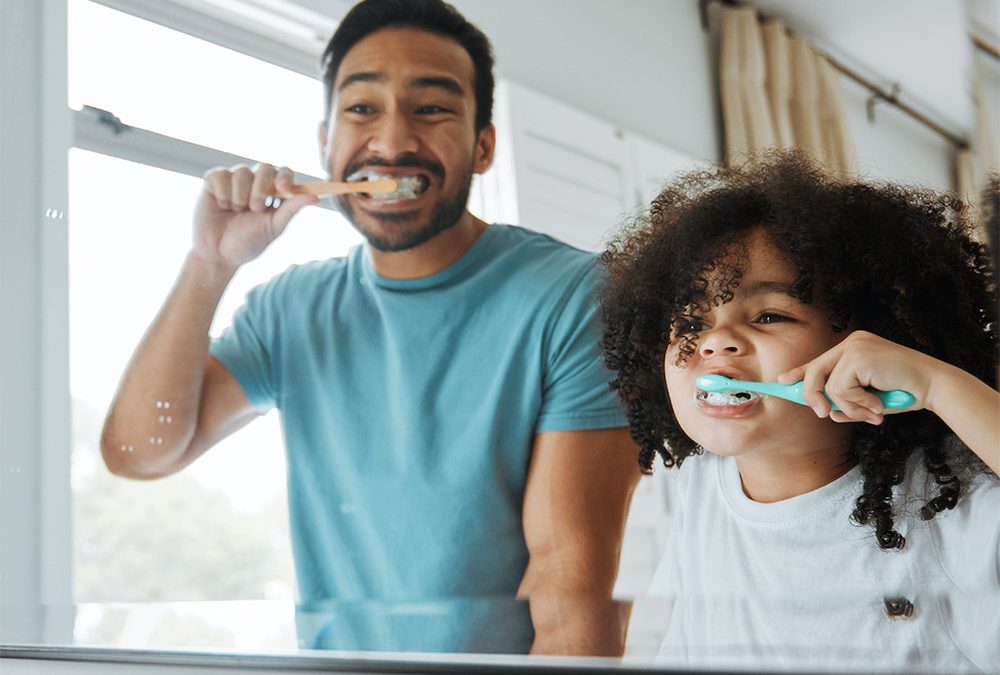
You might floss and brush alongside younger children, let everyone choose their own toothbrush, or use the evening routine as a predictable transition toward bedtime.
As children get older, the goal gradually shifts from doing everything for them to helping them take ownership of their own habits.
This can also remove some of the tension surrounding dental care. Brushing isn’t a punishment or a chore reserved for children. It’s simply something everyone in the household does to care for themselves.
And parents don’t need to model perfection. Saying, “I forgot to floss yesterday, so I’m getting back to it tonight,” teaches something valuable, too: healthy habits can be restarted.
When children see you caring for your own smile, oral hygiene becomes a normal part of family life rather than another rule they have to follow.
DON’T PUT OFF YOUR OWN DENTAL VISITS INDEFINITELY
It’s remarkably easy for parents to stay current with pediatrician appointments, school forms, sports physicals, and children’s dental visits while realizing they haven’t scheduled their own dental appointment in far too long.
Your oral health deserves a place on the calendar, too.
Preventive visits can help monitor:
- Gum health
- Cavities
- Existing fillings or crowns
- Signs of grinding
- Changes in your bite
- Persistent sensitivity
- Other concerns you’ve been too busy to think about
For some parents, pregnancy, stress, sleep disruption, or changes in daily routines may also affect oral health during different stages of family life.
Our approach to routine dental cleanings and preventive oral health care can help maintain your smile even when life outside the dental office is particularly busy.
Scheduling your next visit before leaving the office can also remove one future task from your list.
Making time for preventive care now can be simpler than trying to fit unexpected dental problems into an already crowded schedule later.
GIVE YOURSELF A ROUTINE YOU CAN ACTUALLY MAINTAIN
Good oral health doesn’t require becoming the most organized parent on the block.
It requires a few habits you can repeat most days.
Floss first. Brush second. Drink water. Pay attention when something changes. Keep your preventive appointments.
Some days will go smoothly. Others won’t.
The goal is not to turn dental care into another source of pressure. It’s to create a routine simple enough that you can return to it even after the busiest days.
If your own oral health has been pushed aside while you’ve been caring for everyone else, a dental visit is an opportunity to refocus without judgment. We can evaluate where things stand and help you find a routine that works with your schedule.
Schedule an appointment with Dr. Stephen Coates, DDS and give your own smile some of the same attention you spend every day giving to your family.
ADDITIONAL QUESTIONS ABOUT ORAL HEALTH FOR BUSY PARENTS
What if I don’t have time to floss every morning?
If mornings are consistently rushed, choose another time when you’re more likely to be consistent. Daily flossing matters more than forcing it into a particular hour. When you do complete your routine, Dr. Coates recommends flossing before brushing.
Should parents and children brush their teeth together?
They certainly can. Brushing together can help younger children see oral hygiene as a normal family habit and gives parents an opportunity to supervise their technique when appropriate.
Is drinking water enough after I eat when I can’t brush?
Water can help rinse away food debris and support saliva, but it doesn’t replace regular brushing and flossing. Think of water as a helpful habit between your normal oral hygiene sessions.
How can I remember dental appointments when our family schedule is packed?
Schedule future preventive visits before leaving the dental office when possible, and put them into your calendar immediately. Treating your appointment like any other family health commitment can make it less likely to be postponed indefinitely.
What should I do if I’ve neglected my teeth while caring for my family?
Start with what you can control today. Resume daily flossing and brushing, and schedule a dental evaluation if you’re overdue. The purpose of the visit is to understand your current oral health and decide what, if anything, needs attention.


