
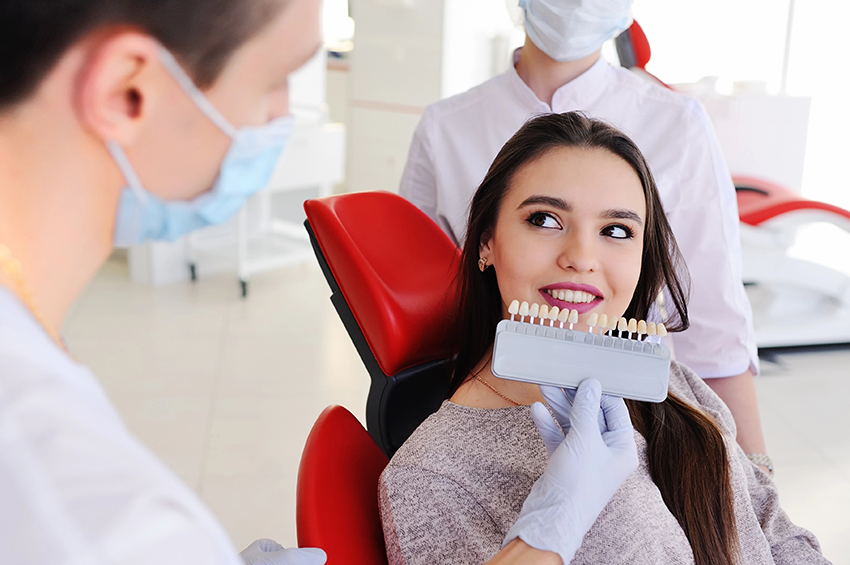
Porcelain crowns are a durable and natural-looking way to protect, restore, and enhance teeth that can’t be repaired with a filling alone. While they’re commonly associated with major dental work, you don’t have to have extensive damage to benefit from a crown. In fact, crowns are a key part of treatment for many common dental issues.
Whether you’ve been told you might need a crown or are just curious about your options, this post will help clarify when and why porcelain crowns are recommended—and how they can benefit your oral health and confidence.
WHY CHOOSE PORCELAIN FOR YOUR CROWN?
If you’re considering a crown, you’ve probably seen a few options: porcelain, metal, or a combination of both. While each material has its place, porcelain crowns are a popular choice for many patients—especially when appearance matters.
Here’s why porcelain may be the right fit for you:
- They blend in seamlessly with your natural teeth.
Porcelain mimics the color, translucency, and texture of enamel, so your crown won’t stand out or look artificial. - They’re stain-resistant.
Unlike natural teeth, porcelain is less likely to stain from coffee, tea, wine, or tobacco—keeping your smile brighter longer. - They’re metal-free.
Porcelain crowns are a great option for patients with metal sensitivities or for those who want to avoid the appearance of dark metal lines near the gumline. - They offer strong, long-term results.
When properly cared for, porcelain crowns are durable and can last for many years—providing both function and cosmetic enhancement.
For patients who value both health and aesthetics, porcelain crowns offer the best of both worlds.
5 SIGNS A PORCELAIN CROWN MIGHT BE RIGHT FOR YOU
If you’re not sure whether a crown is necessary, here are some of the most common reasons your dentist may suggest one:
- You’ve had a root canal.
After a root canal, the affected tooth becomes more brittle and prone to fractures. A porcelain crown covers and protects the tooth, restoring strength and preventing future damage.
- You have a cracked or broken tooth.
When a tooth is cracked or broken beyond what a filling can repair, a crown offers full-coverage protection. It holds the remaining tooth structure together and restores its shape and function.
- You have a large or worn-down filling.
Teeth with large fillings can weaken over time, especially if there’s little natural tooth structure left. A crown reinforces the tooth and helps avoid future fractures or decay around the edges of the filling.
- You want to improve the appearance of a misshapen or discolored tooth.
Porcelain crowns don’t just restore function—they also enhance your smile. If you have a tooth that’s misshapen, uneven, or permanently discolored, a crown can help you achieve a more uniform and attractive appearance.
- You grind your teeth or have worn enamel.
Excessive grinding (bruxism) or natural enamel erosion can wear down teeth significantly. A crown provides a strong, long-lasting layer of protection that helps restore normal chewing ability and tooth shape.
Porcelain crowns are a versatile solution that combine durability with aesthetics—so you don’t have to choose between protecting your teeth and having a beautiful smile.
LET’S FIND THE RIGHT SOLUTION FOR YOUR SMILE
If you’re experiencing tooth pain, damage, or wear—or just want to explore your cosmetic options—porcelain crowns could be the perfect fit. Dr. Stephen Coates, DDS offers custom crowns designed to match your natural teeth and restore both function and beauty.
Click here to schedule your appointment and find out if a crown is the right step for your smile.


